


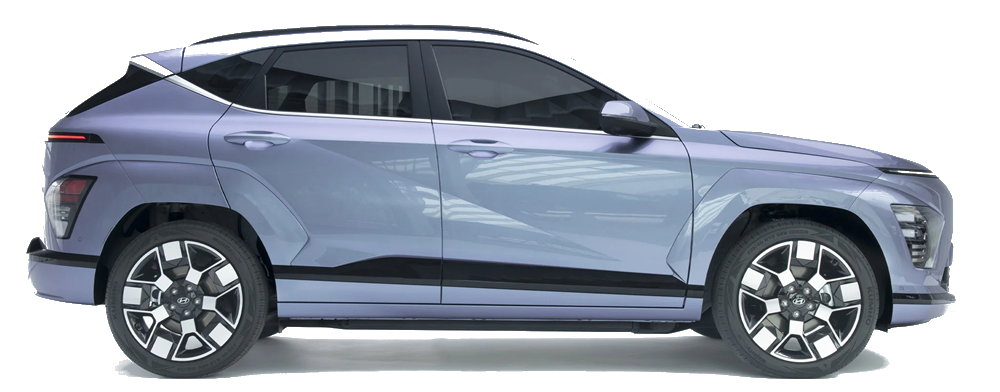
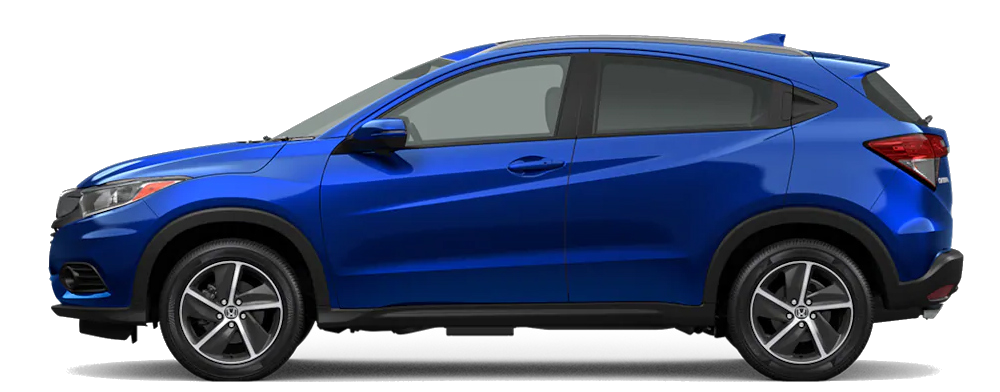
If you're in the market for a compact, adventure-ready SUV, you probably have the Hyundai KONA and the Honda HR-V at the top of your list. The question is, which one is better suited for your journeys through the Dearborn, Detroit, and Hamtramck, MI, areas?
To help you find the answer, our team at LaFontaine Hyundai has put these SUVs into a head-to-head comparison. It's the Hyundai KONA vs. the Honda HR-V. Let's see which one comes out on top!

MAX HORSEPOWER

SMARTPHONE INTEGRATION

STANDARD TOUCHSCREEN SIZE

Adventures come in all shapes and sizes. Will the Hyundai KONA or the Honda HR-V help you conquer paved roads and dirt paths? Let’s find out!
Embarking on your daily commute to the office can be just as fun as traversing muddy and rocky roads when you drive the Hyundai KONA or the Honda HR-V. This is thanks to their power-packed capabilities, and that starts with the equipment under their respective hoods.
The HR-V is powered by a 2.0L engine that generates 158 horsepower and 138 lb-ft of torque. While impressive, it’s the only engine offered by the HR-V, so drivers who crave more oomph will have no other options.
That’s not the case with the KONA. Although its standard configuration produces comparable power, its optional 1.6L Turbo-GDI configuration powers ahead with up to 190 horsepower and 195 lb-ft of torque.
When your SUV is equipped with all-terrain capabilities—such as optional all-wheel drive and selectable drive modes—it’s no surprise that you’d plan to take the scenic route more often. Only one of these SUVs can help you travel farther distances with fewer stops at the gas station. Which one will it be?
|
Hyundai KONA
|
EPA-Estimated Mileage |
Honda HR-V
|
|---|---|---|
| 29 city MPG* | City Miles | 26 city MPG |
| 34 highway MPG* | Highway Miles | 32 highway MPG |
Thanks to its higher fuel efficiency, you can extend your off-roading trips when you drive the KONA.

No matter where you go, comfort is a top priority. Fortunately, the KONA and the HR-V excel in this area. Let’s explore!
Wiggle room plays a significant factor in the comfort of you and your passengers. Each SUV provides seating for five passengers. Still, those looking for more room to stretch out should turn to the KONA.
|
Hyundai KONA
|
vs |
Honda HR-V
|
|---|---|---|
| 39.3/38.3 inches | Headroom (front/rear) | 39.4/38 inches |
| 41.7/38.2 inches | Legroom (front/rear) | 41.9/37.7 inches |
| 56.8/55.2 inches | Shoulder room (front/rear) | 56.6/55.2 inches |
| 54.3/52.4 inches | Hip room (front/rear) | 54/47.4 inches |
While the dimensions may appear similar on the surface, the extra legroom and hip room in the second row of the Kona will keep your back-seat passengers more comfortable than in the HR-V.
Beyond interior dimensions, you’ll find a slew of comfort amenities to keep you relaxed on short and long trips alike. Heated upholstery is an additional option in both the Hyundai KONA and the Honda HR-V. However, only the KONA offers available ventilated front seats to help you remain comfortable no matter what the season or external temperature.
Where the KONA pulls ahead in this comfort competition is with its optional sport seats. You’ll feel like you’re wrapped in the world’s most comfortable embrace thanks to the side bolsters that hug your curves. The addition of contrast red stitching also adds a subtle sporty touch to the cabin.

Whether heading to work or your favorite remote camping spot, you’ll always stay connected and safe behind the wheel of the KONA or the HR-V thanks to their innovative tech features.
It’s easy to bring along your favorite songs, podcasts, and other digital features as you travel thanks to the standard integration of Apple CarPlay® and Android Auto™. Still, if you choose to drive the HR-V, be sure to bring a USB cable along for the ride since, unlike with the Hyundai KONA, wireless integration is only an available option.
Furthermore, KONA drivers will have an easier time viewing information thanks to its 12.3-inch touchscreen. The HR-V, on the other hand, only offers a 7- or optional 9-inch display.
If you're looking for peace of mind on the road, the KONA and the HR-V can provide that feeling with their comprehensive safety suites: Hyundai SmartSense and Honda Sensing® respectively. Each suite uses cameras and sensors to monitor your surroundings and alert you to potential hazards you may have missed.
While Honda Sensing® can help keep you safe, it doesn’t offer the same capabilities as Hyundai SmartSense since it lacks features like Driver Attention Warning. This feature uses advanced technology to detect drowsy and distracted driving patterns and provides an alert. That way, you can decide if it’s time to pull over and take a break.

Now that you know what both SUVs bring to the table, it's clear that if you want more power, extra space, and advanced technology, the Hyundai KONA edges out the Honda HR-V.
If you'd like to see what it can bring to your adventures through Dearborn, Detroit, or Hamtramck, MI, visit us here at LaFontaine Hyundai and schedule a test drive today!
All of the tools you need to move forward with experiencing a new Kona for yourself are conveniently available right here online.
Explore our extensive new inventory, receive an estimate on your trade-in, apply for credit or contact us to schedule your in-person test drive using the quick links here.
Shop Hyundai Kona Value Your Trade Apply for Financing Schedule a Test Drive* 2024 KONA SE – FWD: 29 City/34 Hwy/31 Combined MPG; AWD: 27 City/29 Hwy/28 Combined MPG. SEL – FWD: 28 City/35 hwy/31 Combined MPG; HTRAC AWD: 26 City/29 Hwy/27 Combined MPG. N Line FWD: 26 City/32 Hwy/28 Combined MPG; HTRAC AWD: 24 City/29 Hwy/26 Combined MPG. Limited FWD: 26 City/32 Hwy/28 Combined MPG; HTRAC AWD: 24 City/29 Hwy/26 Combined MPG. All figures are EPA estimates and for comparison purposes only. Actual mileage may vary with options, driving conditions, driving habits and vehicle's condition.
LaFontaine Hyundai Dearborn
Address
3031 South Telegraph Road
Dearborn, MI 48124
Phone
- 313-217-1582
| Monday | 9:00AM - 8:00PM |
| Tuesday | 9:00AM - 6:00PM |
| Wednesday | 9:00AM - 6:00PM |
| Thursday | 9:00AM - 6:00PM |
| Friday | 9:00AM - 6:00PM |
| Saturday | 10:00AM - 4:00PM |
| Sunday | Closed |
| Monday | 7:30AM - 6:00PM |
| Tuesday | 7:30AM - 6:00PM |
| Wednesday | 7:30AM - 6:00PM |
| Thursday | 7:30AM - 6:00PM |
| Friday | 7:30AM - 6:00PM |
| Saturday | 8:00AM - 2:00PM |
| Sunday | Closed |
| Monday | 7:30AM - 6:00PM |
| Tuesday | 7:30AM - 6:00PM |
| Wednesday | 7:30AM - 6:00PM |
| Thursday | 7:30AM - 6:00PM |
| Friday | 7:30AM - 6:00PM |
| Saturday | 8:00AM - 2:00PM |
| Sunday | Closed |
